

Most Fort Myers business owners I talk to aren’t thinking about cybersecurity when they wake up. They’re thinking about payroll, their next hire, whether that big client is going to renew. Totally understandable.
The problem is, that’s exactly what cybercriminals are banking on. Small businesses have become the easiest targets, not because they have the most money, but because they usually have the least protection. And the cost of getting hit? For a small Florida business in 2026, a single data breach can run into the hundreds of thousands once you add up legal fees, forensic work, and the customers who stop calling.
Here are five threats I keep seeing hit businesses around Fort Myers, Cape Coral, and Southwest Florida, and what you can actually do about each one.
1. AI-powered phishing attacks
Remember when scam emails were easy to spot? Weird grammar, random attachments, a Nigerian prince who really needed your help? Those days are gone.
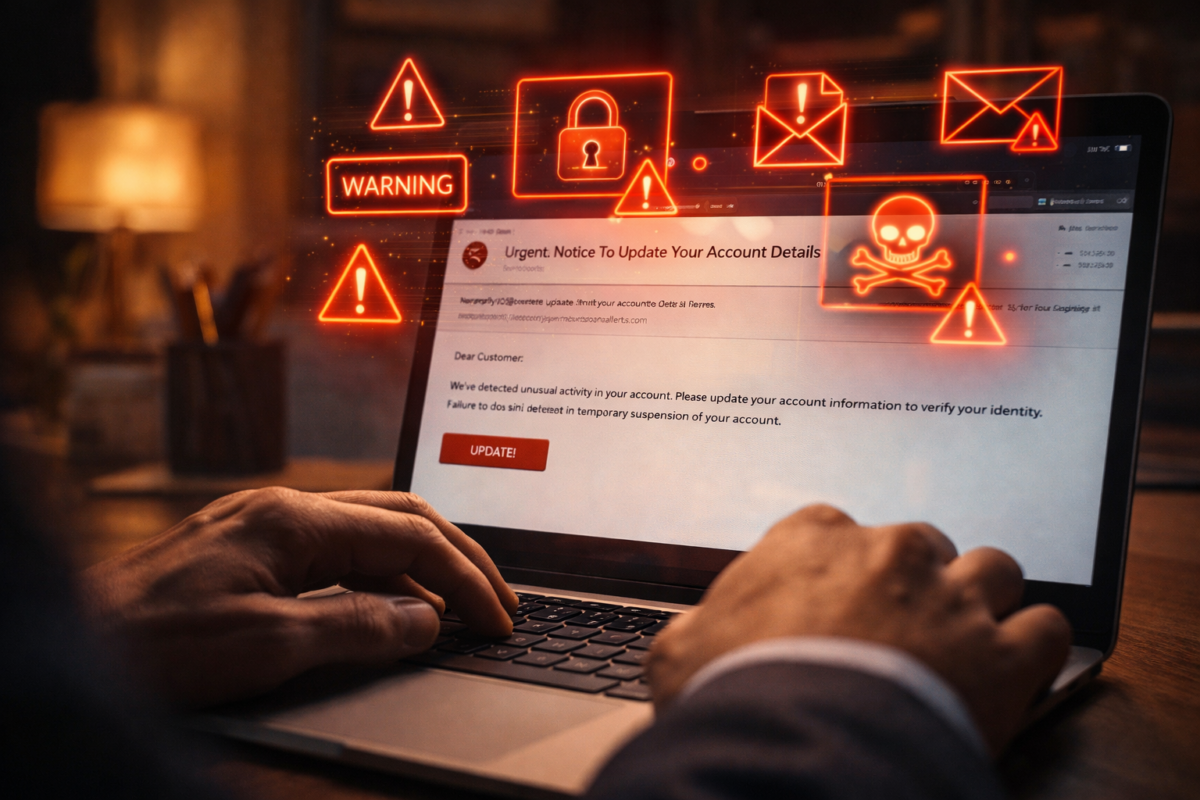
Phishing emails in 2026 look legit. Like, disturbingly legit. Attackers are using AI to write emails that match the tone and style of people you actually work with. Some of them will reference real projects, real invoices, even real names from your company. All it takes is one employee clicking the wrong link, and suddenly someone has the keys to your network.
What you can do about it: Train your team, but not with a boring annual slideshow. Run actual simulated phishing tests so people learn what to watch for in a way that sticks. And set up multi-factor authentication on everything. If someone’s password does get compromised, MFA is the safety net that keeps attackers out.
2. Ransomware that steals before it locks
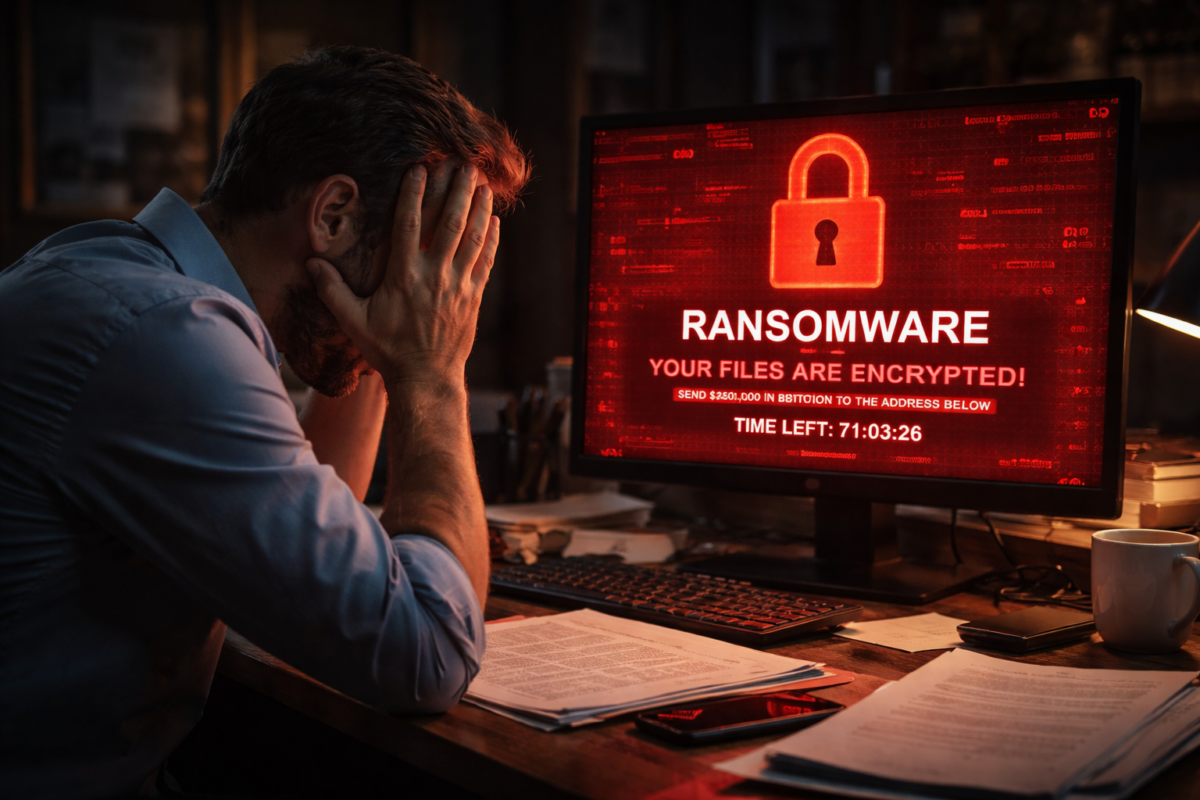
Ransomware used to be straightforward, hackers lock your files, demand payment, you either pay or restore from backups. The newer versions are nastier. They copy your data first, then encrypt everything, then threaten to publish your files online if you don’t pay.
Think about what that means for a local business. Your customer records, financial data, employee SSNs, all potentially dumped on the dark web. The ransom itself might be the cheapest part of that mess. It’s the lawsuits and the reputation damage that really sting.
What you can do about it: Keep backups, and keep one copy offline, since ransomware can reach the cloud copy too. Patch your software regularly (yes, those annoying update notifications actually matter). And having someone monitoring your network around the clock makes a huge difference. Most ransomware attacks show warning signs before they fully deploy.
3. Business email compromise
This one’s scary because it doesn’t involve any malware at all. An attacker gets into a business email account, usually through a phished password or a credential leak, and just sits there. Watching. Reading emails. Learning how the business operates.
Then they strike. They send an email that looks like it’s from the CEO asking accounting to wire money to a new vendor. Or they intercept a real invoice and swap in their own bank details. I’ve talked to business owners around Fort Myers who lost tens of thousands before anyone noticed something was off.
What you can do about it: MFA on every email account, no exceptions. Set up alerts for things like email forwarding rule changes (a classic attacker move). And create a verification process for any financial request, a quick phone call to confirm a wire transfer has saved more businesses than any piece of software.
4. Cloud misconfigurations
Most businesses around here are using some kind of cloud service, Microsoft 365, Google Workspace, QuickBooks Online, something. And moving to the cloud is generally a good thing. But a lot of people assume the cloud provider handles all the security for them. They don’t.
You’re still responsible for how things are configured. Weak passwords, employees with admin access who don’t need it, sharing settings left wide open, that stuff causes breaches all the time. It’s not glamorous, and it doesn’t make the news, but misconfigured cloud accounts are one of the most common ways data leaks happen.
What you can do about it: Review who has access to what, and cut permissions you don’t need. Make sure MFA is turned on across all your cloud platforms. And every few months, do a quick audit of your sharing settings, you’d be surprised how often files are set to “anyone with the link” when they shouldn’t be.
5. Supply chain and third-party risks
Here’s one that catches people off guard: you can do everything right on your end, and still get breached because a vendor or software provider you work with gets hacked. Your accounting firm, your payment processor, that random plugin on your website, any of them can be the weak link.
This isn’t hypothetical. Some of the biggest breaches in recent years started with a compromised third-party tool that had access to thousands of businesses at once.
What you can do about it: Ask your vendors about their security practices. It’s not rude, it’s responsible. Limit what access third parties have to your systems, and revoke it when a project wraps up. And keep an eye on security news for any tools or platforms you rely on.
Don’t wait until it’s too late
None of this is meant to scare you into paralysis. But the businesses around Fort Myers, Cape Coral, Bonita Springs, and Naples that are doing well in 2026 are the ones taking this stuff seriously, not because they’re paranoid, but because they’ve seen what happens to the ones who don’t.
At HenkTek, this is literally what we do every day for local businesses. Network security assessments, employee training, 24/7 monitoring, incident response, all of it. We’re based right here in Fort Myers, and we know the local business space because we’re part of it.
Want to know where your business actually stands? Reach out to us for a free cybersecurity assessment. No pressure, no jargon, just a clear picture of what’s working and what needs fixing. Call us at (239) 234-2334 or fill out the contact form.
You might also like:
More from HenkTek
- Data Backup and Disaster Recovery Guide
- Managed IT Services in Fort Myers
- Video Surveillance Solutions
HenkTek is a local IT company in Fort Myers that looks after the technology Southwest Florida businesses depend on, from Cape Coral and Bonita Springs to Naples. We handle managed IT, cybersecurity, backups and help desk support, and we explain things in plain English.