

Picture a contractor wiring $1,900 for a construction permit that doesn’t exist. That’s the shape of the fake website scams Fort Myers businesses are up against right now. Town leaders on Fort Myers Beach are warning about a scam website contacting people with wire transfer demands for event permits, construction permits, and other town services. The fake site looks close enough to the real thing that a busy office manager has no reason to squint at it.
These scams work because nobody reads a web address twice. You search for a payment portal, you click the first result that looks right, you pay. Below is how the fakes operate, how to catch one before money moves, and what happens when the site being cloned is yours.
The Fort Myers Beach permit site warning
The scam is blunt. A website dressed up as the Town of Fort Myers Beach reaches out about permits or other town services and asks for payment by wire. Officials say the requests are fraudulent, and they put out a public warning after a string of cases. If you get an email or a call about a town fee, close it and type the official address yourself, or better, call the office on a number you already have on file. Real government offices in Lee County will take a check or a card through their own portal. A demand for a wire transfer to settle a permit is a tell every single time.
And this goes way past governments. Scammers clone whatever gets paid: vendor login pages, bank sites, shipping accounts, invoice portals. The Fort Myers Beach site is the local example, the same trick runs everywhere.
Fake website scams Fort Myers businesses keep paying
Most of the fake website scams hitting Fort Myers businesses lean on a few moves. Typosquatting swaps a letter or two in the address, like payrnents instead of payments, and your eye autocorrects it for you. Subdomain tricks put a trusted name in front of a domain the scammer owns, so yourbank.secure-payportal.com has nothing to do with your bank. Paid search ads sometimes put the fake above the real site in your results, which means the top spot can be the one to trust least.
The padlock icon doesn’t save you here either. It only means the connection is encrypted. Scammers can grab that certificate free in about ten minutes, so a padlock on a fake address just means your card number travels securely to a criminal.
Read the address right to left. The part that matters is the last chunk before the first slash. If that piece isn’t the company’s real domain, leave. And check spelling character by character, autocomplete has burned plenty of people.
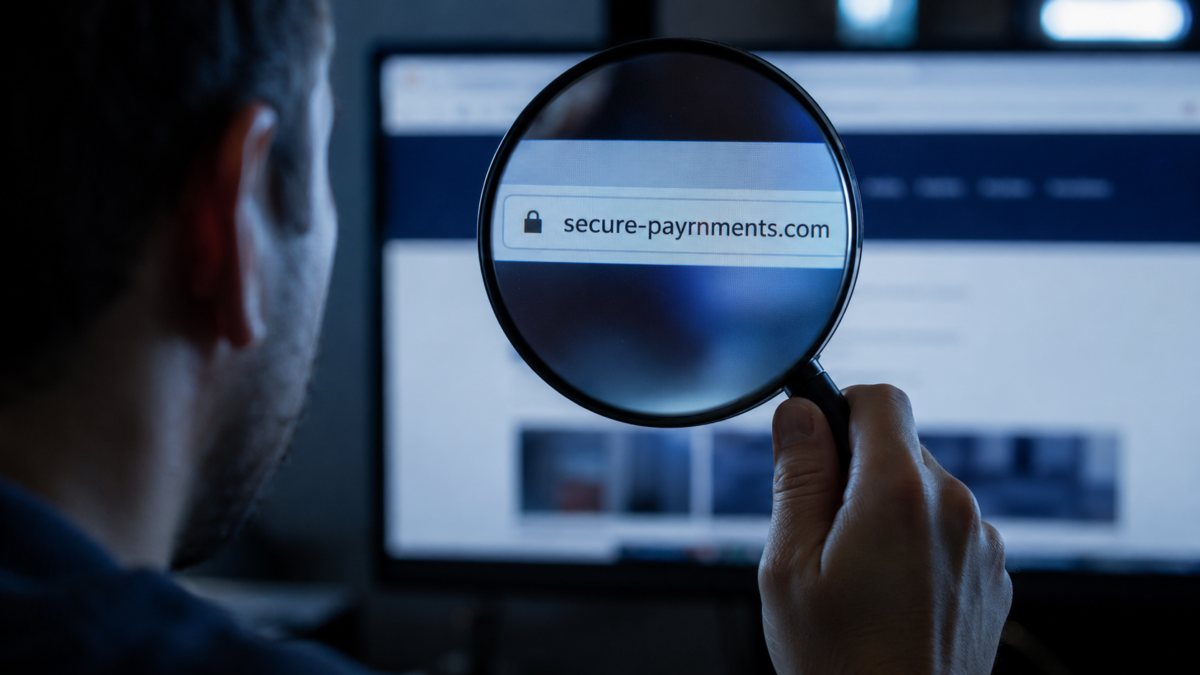
What Fort Myers businesses can do: pay from bookmarks or hand typed addresses, never from links in emails or texts. If an invoice or portal suddenly wants a wire, Zelle, gift cards, or crypto, stop and call the company on a number from an old statement. Slow is cheap. Recalling a wire is close to impossible.
Your own website can be cloned too
The other half of this problem: someone can copy your site and go after your customers with it. A cloned page with your logo and a tweaked domain can collect deposits for weeks before anyone mentions it to you, and by then the damage lands on your name.
A few cheap defenses go a long way. Lock your domain at the registrar so it can’t be transferred out from under you, and keep the renewal on autopay so it never lapses. If the obvious misspelling of your domain costs twelve bucks a year, buy it. Set up email authentication (SPF, DKIM, DMARC) so crooks can’t send invoices that pass as coming from your address. Then search your business name once a month and set a Google Alert for it, because customers usually find the clone before the owner does. We covered how hacked email feeds wire fraud in Fort Myers, and cloned sites are the same crime in a different costume.
If money already moved
Call your bank before anything else and ask for the wire recall desk and a freeze on outgoing transfers. Your odds are best inside the first day or two. After that the money has usually hopped through three accounts and gone. Banks treat business wire fraud differently than consumer card fraud, and most of the time nobody is required to make you whole, which is why prevention carries the whole load here.
Then file a report at the FBI’s IC3.gov and with the FTC. It feels like paperwork, but recovery teams do claw money back when reports land fast. Keep everything: the emails, the receipt, the exact web address. And tell the real organization they’re being impersonated so they can push to get the fake taken down.
Get a second look before money moves
HenkTek helps small businesses across Fort Myers, Cape Coral, Bonita Springs, and Naples with exactly this stuff. We’ll check a suspicious site or invoice before you pay it, set up email authentication and domain locks, and train whoever pays your bills on spotting a lookalike. A five minute phone call beats a five figure loss. Call (239) 234-2334 or reach us through our contact page for a free consultation. More security guides for Southwest Florida businesses live on henktek.com.